
Introduction
Your brand identity is one of your most valuable assets. It represents everything your business stands for, from quality and professionalism to creativity and trust. When you decide to embroider your logo onto uniforms, hats, or promotional merchandise, you expect that same level of quality to carry through. But here is the challenge: embroidery machines do not understand logos the way we do. They cannot interpret colors, shapes, or meaning on their own. They need a detailed set of instructions that tells them exactly what to do, when to do it, and how to do it. Embroidery Digitizing Services are the bridge between your digital artwork and the physical reality of thread and fabric. They take your flat, two-dimensional logo and translate it into a language your embroidery machine understands perfectly. For businesses and brands, choosing the right digitizing partner is not just about getting a file. It is about ensuring consistency, efficiency, and professional results that strengthen your brand identity.
What Is Embroidery Digitizing and Why Do Businesses Need It?
Embroidery digitizing is the process of converting artwork into a stitch file that guides your embroidery machine through every needle penetration, color change, and trim command . Think of it as creating a detailed roadmap for your machine. A digitized file tells the machine exactly where to move the hoop, what type of stitch to use, when to change colors, and in what sequence to sew each element.
For businesses, the quality of digitizing determines whether the final product looks crisp and professional or blurry and puckered . A poorly digitized file can cause constant thread breaks, fabric puckering, and distorted shapes. A professionally digitized file runs smoothly, produces crisp details, and delivers consistent results across different garments and machines.
Many companies assume that embroidering a logo is straightforward. You send the logo file to an embroidery shop, and a few days later, the finished products arrive. In reality, before any machine starts, the logo goes through digitizing, and it is the quality of this step that determines whether the final result looks crisp and precise .
Manual vs. Auto Digitizing: What Sets Professional Services Apart
One of the most important distinctions in the digitizing industry is between manual and automated digitizing. This difference directly affects the quality of your final embroidery files.
Auto Digitizing applies the same settings to every design, regardless of its unique characteristics. The results often include broken and uneven stitches, inaccurate details in lettering, and no control over stitch density or angles . Auto tools might look okay on screen, but they frequently fail in production .
Manual Digitizing, on the other hand, delivers clean runs, better results, and fewer thread breaks. Professional digitizers carefully adjust stitch density, stitch direction, and fabric compatibility to ensure clean outlines, precise lettering, and high-quality embroidery output . Manual digitizing provides neat outlines, accurate reproduction of tiny details, fabric-matched stitch types, and customized designs for high quality .
For businesses that rely on consistent branding, the choice between manual and auto digitizing is clear. Professional services that use manual digitizing with experienced professionals produce files that stitch cleanly, minimize production errors, and maintain quality across all your branded merchandise.
The Digitizing Process: What Happens When You Send Your Logo
When you submit your logo for digitizing, the process follows a methodical sequence that ensures quality and consistency. Understanding this process helps you appreciate the skill involved and communicate more effectively with your digitizing partner.
Artwork Analysis: The digitizer examines your logo, identifying potential challenges like small text, fine lines, or complex gradients . An experienced specialist considers the logo's geometry, scale, and the fabric it will be sewn onto.
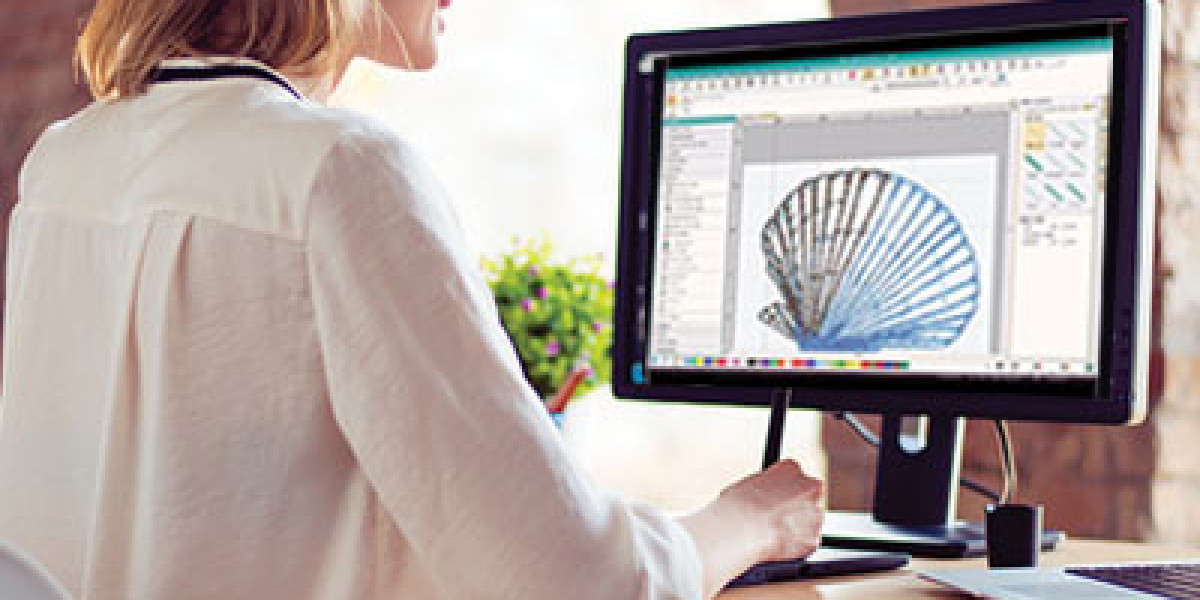
Manual Tracing: Using specialized software like Wilcom, the digitizer traces every element of your logo by hand . This is not an automated process. It requires a steady hand and a keen eye for detail.
Stitch Assignment: The digitizer decides which parts of the logo will use satin stitches for smooth, shiny areas and which will use fill stitches for textured sections . They set stitch angles to control how light reflects off the design.
Underlay and Compensation: Underlay stitches are added to stabilize the fabric. Pull compensation is applied to prevent distortion when the fabric stretches during stitching . A good digitizer applies pull compensation by making areas slightly wider than the original artwork, so the finished embroidered logo appears optically correct.
Quality Check: The digitized file is tested for clean jumps and efficient color changes to minimize production issues . Many services provide sew-out samples for customer approval before full production runs .
How Custom Digitizing Serves Different Business Needs
Professional digitizing services support businesses across a wide range of industries and applications .
Corporate Branding and Workwear: Companies need their logos embroidered onto employee uniforms, promotional merchandise, and corporate gifts. Consistency across all applications is critical for brand identity . Professional digitizing accounts for garment type, stitch angles, pull compensation, and fabric movement to ensure brand consistency, sharp detailing, and long-lasting results across workwear, uniforms, and promotional apparel .
Fashion and Apparel Design: Designers use embroidery to elevate their products and add perceived value. Custom digitizing ensures the design captures the designer's vision perfectly, whether it is a tiny sleeve logo or a large jacket back .
Sports Teams and Clubs: Custom jerseys, caps, and jackets require reliable digitizing that handles different fabric types and placement areas like left chest logos and jacket backs . 3D puff digitizing can add tactile depth and dimensionality, making logos more memorable and engaging .
Promotional Products: Companies order embroidered items like tote bags, caps, and patches for events and giveaways. Fast turnaround is often essential .
Industrial Applications: Some digitizing services also support smart textiles, functional workwear, and automotive interiors, where precision integration of conductive threads and high-durability stitch logic are required .
Common Problems Professional Digitizing Prevents
Understanding the problems that professional digitizing prevents helps you appreciate its value for your business.
Thread Breaks: When density is too high or stitch paths are poorly planned, the machine struggles to push the needle through the fabric. Professional digitizing optimizes density and pathing to minimize thread breaks .
Fabric Puckering: When the digitizer fails to account for fabric pull or uses the wrong underlay, the fabric wrinkles around the design. Custom digitizing applies the right compensation and underlay for your specific material.
Lost Detail: Small text and fine lines often become illegible when digitized poorly . Professional digitizers recommend that minimum text height in embroidery should be at least 4 mm, and the thinnest lines at least 0.8 mm wide .
Color Misalignment: When different color sections of the design do not line up correctly, you get gaps or overlapping areas. Professional digitizing ensures seamless alignment between color blocks.
Inconsistent Results: When multiple vendors are used, variations can occur. Centralizing digitizing with one service ensures a brand's visual identity is identical across all platforms .
What to Look for in a Digitizing Partner
Choosing the right digitizing partner is essential for getting great results. Here is what to look for.
Manual Digitizing: Avoid services that rely on automation. Look for a service that uses hand-digitizing with experienced professionals .
Experience and Expertise: Look for digitizers with years of experience who have worked with businesses in your industry. ZDigitizing, for example, has been in the industry for over 10 years and serves over 10,000 clients globally .
Fast Turnaround: Production moves quickly, and delays cost money. Look for services offering 4 to 12 hour standard delivery with rush options available .
Multiple File Formats: Ensure they can deliver in your machine's native format, whether that is DST, PES, JEF, EXP, HUS, or another .
Tested Quality: Professional services check their files before delivery to ensure clean jumps and efficient color changes . Some provide sew-out samples for customer approval .
Free Revisions: Even the best digitizer occasionally needs to make adjustments after a test stitch. Look for services that offer unlimited free revisions .
Conclusion
Custom embroidery digitizing services are essential for businesses and brands that want professional, consistent embroidery results. They take your artwork and transform it into a production-ready file that runs smoothly, produces crisp details, and delivers consistent results across different garments and machines.
Professional digitizers use manual techniques, apply pull compensation, and test their files to prevent common problems like thread breaks, fabric puckering, and lost detail. They understand that your logo represents your brand and treat it with the respect it deserves.
Do not settle for automated digitizing that produces inconsistent outcomes. Invest in custom embroidery digitizing services that use manual techniques, test their files, and offer fast turnaround with free revisions. Your brand deserves to look its best, and your customers deserve to see the quality you represent. With the right digitizing partner, your embroidery projects will shine.